
Historic England launched in March 2026 a study of passive architectural measures to reduce overheating in historic buildings. They comissioned the Thread consultancy to research how England’s historic buildings can be adapted to the changing climate.

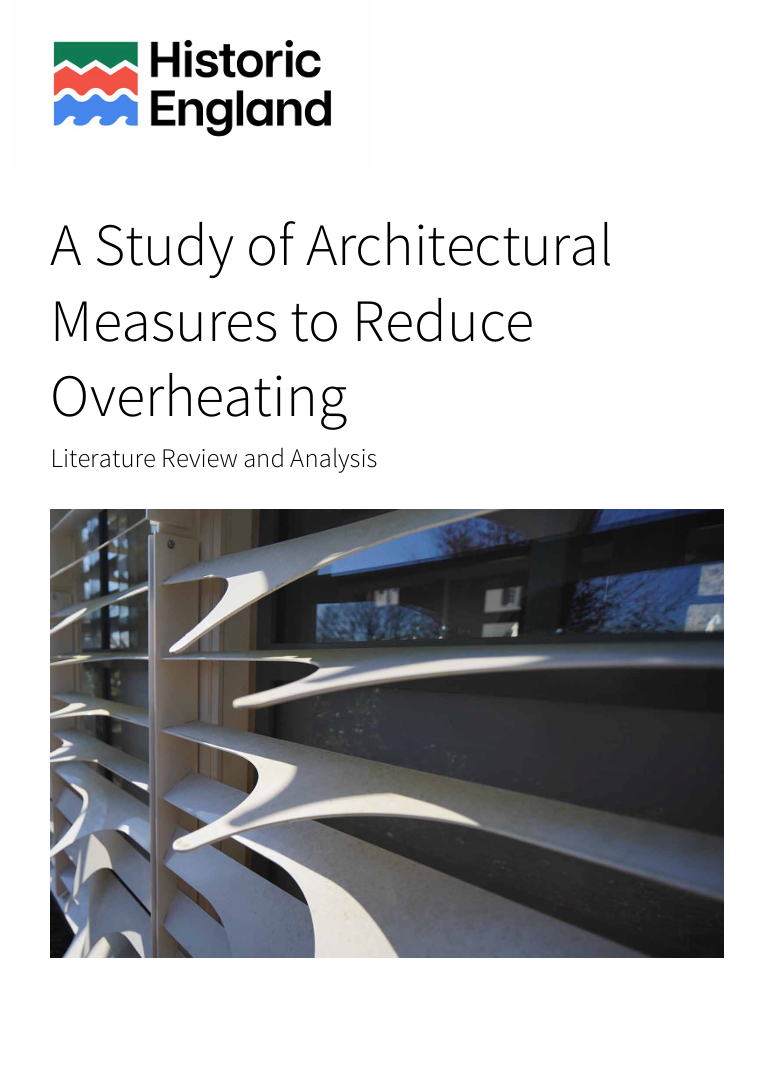
The research investigated how passive architectural measures, such as awnings or shutters, have been used in the past to reduce solar gain and seasonal overheating. The options explored in the report are not limited to shading devices but include contemporary measures through ventilation and surface/material applications.
The work also seeks to identify limitations, risks, or opportunities presented by current regulations, standards, health, safety and future climate events, that might prevent the implementation of these methods for passive cooling in England’s historic building stock.
The report includes a discussion of the increased risk of overheating that may result from poor or ill-conceived retrofit, by way of unintended consequences (causing harm to the significance of the building, its fabric or occupants) or maladaptation (undermining the building’s performance and resilience to climate change).
The work highlights the importance of addressing the interlinked impacts of reduced heat loss in winter and increased cooling needs in summer.
To download the report follow this link: A Study of Architectural Measures to Reduce Overheating
 Industrial Heritage Support