
The latest research from the Mapping Musuems project, based at UCL, uses the Index of Multiple Deprivation to ask whether museums in England are more likely to close in areas of higher deprivation? This question is especially relant to industrial hertiage sites open to the public which are often sited in area sof fomer industry.
The Index is the official measure of relative deprivation in the UK and is assessed on a combination of household income, employment, education, health, crime, barriers to housing and services, and living environment. Using the index allows us to look at deprivation in relation to small areas with around 1,500 residents apiece, which then enables a more nuanced understanding of where museums are located and the types of places where closure occurs.
The Mappign Musuem project notes that the number of independent (not for profit) and private museums has risen since 2000, a feature noted by the IHSO project for industrial hertiage sites and museums. These indepenednet msusm can be founds across the deprivation specturm from most to least mbut with the majority in the middle. However, the number of Local Authority museums has decreased since 2000, with a greater decrease in the number of Local Authority museums in areas of most and least deprivation.
The report conlcudes that the data indicates that ‘change in the sector does not neatly align with levels of deprivation. We cannot link museum closure to deprivation or indeed growth in numbers to a lack of deprivation.’
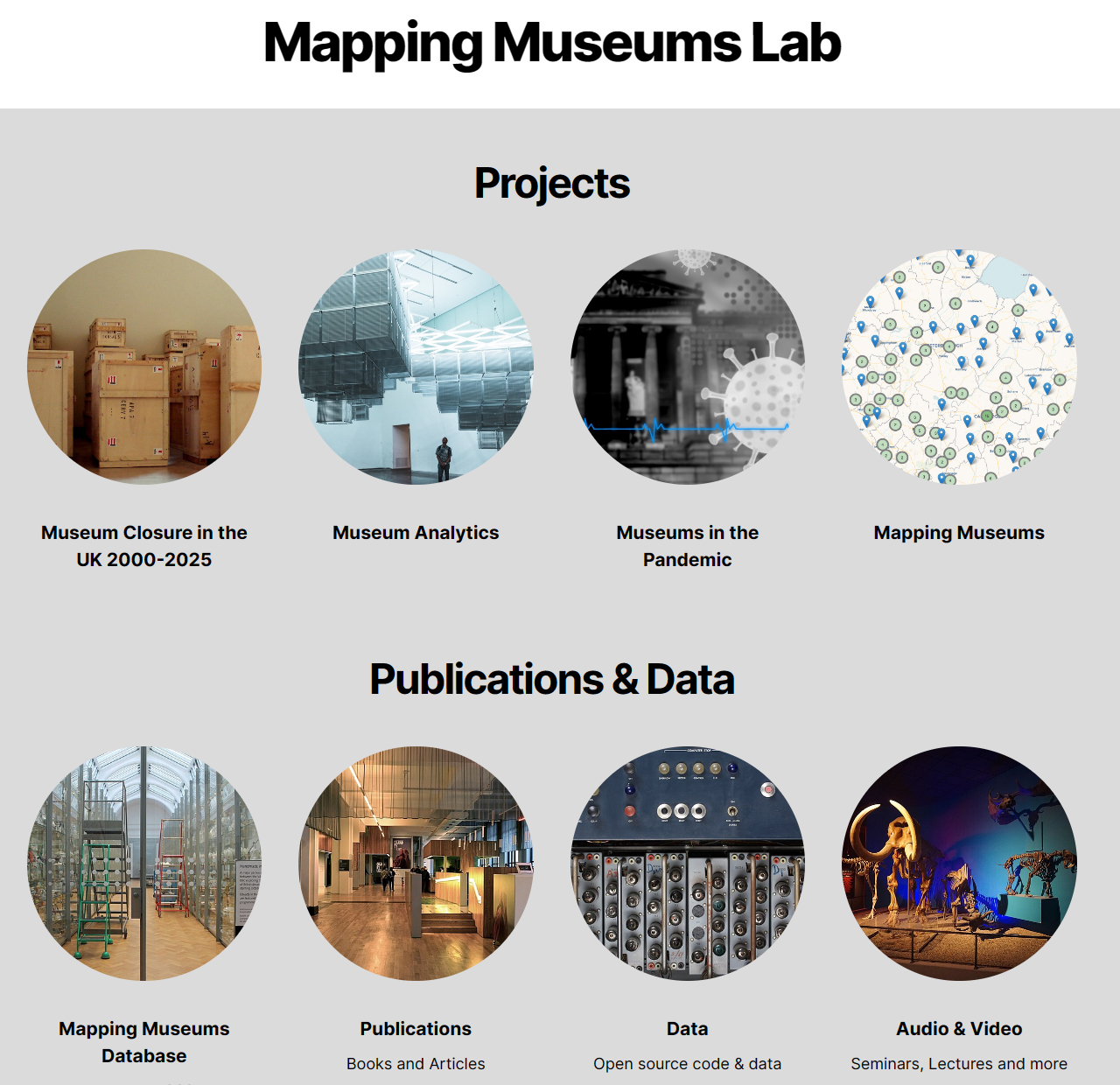
The Mapping Museums Lab is based at Birkbeck, University of London and Kings College London and combines computer science, data science, geography, and museum studies. https://mapping-museums.bbk.ac.uk/ The detailed research can be found here:
https://mapping-museums.bbk.ac.uk/blog/
 Industrial Heritage Support